Israeli Couscous Salad with Roasted Vegetables

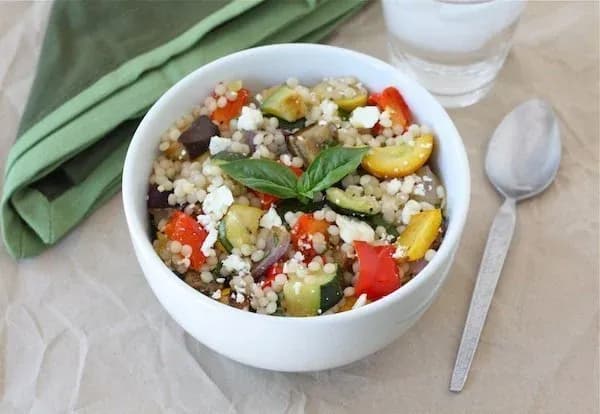
This healthy Israeli couscous salad with roasted vegetables is a perfect make-ahead summer dish. Tossed with balsamic dressing, feta, and basil. Easy, fresh, and crowd-pl
You’ll probably want to bookmark Egg Salad, Apple, Grape, and Candied Pecan Salad with Maple-Mustard Dressing, Roasted Butternut Squash with Balsamic, Blue Cheese, and Pecans, and Roasted Asparagus as well.
Why Roasted Vegetables and Pearl Couscous Are a Perfect Match
When I roast eggplant, zucchini, and peppers for this salad, the kitchen smells incredible. The vegetables caramelize and turn tender, while the pearl couscous gives every bite a pleasant chew. I toss it all with a simple balsamic dressing, fresh basil, and crumbled feta. It’s a healthy summer recipe that disappears fast at parties, and I love that I can make it a day ahead.
Three Reasons This Healthy Summer Recipe Wins Every Time
- Make ahead and forget it: The flavors actually improve overnight, so it’s perfect for prepping before a party.
- Filling without being heavy: The pearl couscous provides substance, while the roasted vegetables keep it fresh.
- Easy to adapt: Use whatever summer vegetables you like or add chickpeas for extra protein.
Key Ingredients for This Pearl Couscous Salad
- Israeli couscous: Also called pearl couscous, these toasted balls have a chewy texture that holds up well in salads. Substitute with orzo or regular couscous, but adjust cooking time.
- Balsamic vinegar: Use a good quality one for depth. It adds sweetness and acidity. White balsamic works for a lighter color.
- Feta cheese: Salty and creamy, it balances the smoky vegetables. Try goat cheese or a dairy-free alternative if needed.
Kitchen Tools You’ll Need for This Salad
- Large baking sheet, to roast vegetables in a single layer without overcrowding.
- Medium saucepan, to cook the couscous.
- Sharp knife and cutting board, for uniform vegetable cuts.
Tips for Perfect Israeli Couscous Salad Every Time
Cut your eggplant, zucchini, and squash into similar-sized cubes so they roast evenly. Smaller pieces cook faster and caramelize better. For the couscous, simmer it just until tender with a slight bite, about 10 to 13 minutes. Drain any excess water if needed. Let the roasted vegetables cool completely before mixing with the basil and feta, or the heat will wilt the basil. You can dress the salad up to a day ahead; the couscous absorbs the vinaigrette and gets even more flavorful.
Easy Ways to Customize Your Couscous Salad
To make this salad more substantial, stir in a can of chickpeas or white beans. If you’re dairy-free, skip the feta or use a vegan alternative. For extra crunch, toss in toasted pine nuts or slivered almonds. Feel free to swap the zucchini and eggplant for asparagus, cherry tomatoes, or bell peppers. The dressing works with any combination.
How to Serve This Crowd-Pleasing Salad
Serve this salad as a main dish for lunch or a light dinner. I like to add a cup of drained canned chickpeas for extra protein. It also pairs beautifully with grilled chicken, lamb chops, or fish. For summer cookouts, offer it alongside burgers or kebabs. The salad tastes fantastic chilled, so you can set it out early and not worry about timing.
Storing and Making Ahead This Chilled Salad
Store leftover salad in an airtight container in the refrigerator for up to 4 days. The couscous will soften slightly, but the flavors will deepen. Let it sit at room temperature for 15 minutes before serving to take the chill off.
Frequently Asked Questions About Israeli Couscous Salad
Can I use regular couscous instead of Israeli couscous?
Yes, but the texture will be different. Regular couscous is much smaller and cooks in about 5 minutes. It will be softer and less chewy. Reduce water and cooking time accordingly.
Can I make this salad vegan?
Absolutely. Omit the feta cheese or use a plant-based alternative. The dressing is already vegan.
Can I add other vegetables?
Yes. Feel free to add cherry tomatoes, asparagus, or mushrooms. Just adjust roasting time as needed.
How long does this salad keep?
It keeps well in the fridge for up to 4 days. The flavors meld, making it even better the next day.
Recipe
Israeli Couscous Salad with Roasted Vegetables

Healthy, fresh and easy Israeli couscous salad! Made with roasted vegetables, it is a great recipe for the summer. This is good as chilled so you can prepare it in advance and serve it to your family anytime!
Ingredients
- 1 small eggplant, chopped
- 1 small zucchini, chopped
- 1 small yellow squash, chopped
- 1 small red pepper, chopped, seeds removed
- 1 small red onion, chopped
- 3 cloves garlic cloves
- 2 tbsp olive oil
- salt
- pepper
- 3 cup water
- 1 pinch salt
- 1.5 cup israeli couscous, dry
- 0.25 cup basil, chopped
- 0.33 cup feta cheese
dressing
- 3 tbsp balsamic vinegar
- 1 tbsp dijon mustard
- 1 clove garlic clove, minced
- 0.5 cup olive oil
- salt
- pepper
Instructions
- 1
To roast the vegetables: Preheat the oven to 400 degrees F. Place the eggplant, zucchini, yellow squash, red pepper, onion, and garlic on a large baking sheet. Drizzle vegetables with olive oil and gently toss. Season with salt and pepper. Place the pan in the oven and roast for about 30-35 minutes, stirring vegetables occasionally. Remove vegetables from the oven and set aside.
- 2
In a medium saucepan, bring three cups of water to a boil. Add a generous pinch of salt, stir in the Israeli couscous. Reduce heat to a simmer. Simmer until couscous is just tender, with a slight bite, about 10 to 13 minutes.
Nutrition (per serving)
Calorie breakdown
How this was calculated — 14 of 20 ingredients matched
Nutrition information is automatically calculated from USDA FoodData Central, so should only be used as an approximation. Actual values may vary depending on the ingredients, brands, and preparation methods used.
Open in analyzerKeyword: healthy, Oven Baked, summer, vegetarian
This post may contain affiliate links. Read our disclosure policy.
Share this recipe
You Might Also Like
View All →

About the Author
NutriforksNutriForks is a home-cooking site built around two simple ideas: recipes should actually work, and you should know what’s in them. Every recipe pairs clear, tested instructions with a full nutrition breakdown, so healthy, everyday cooking is genuinely easy.