Lemon Herb Pork Tenderloin

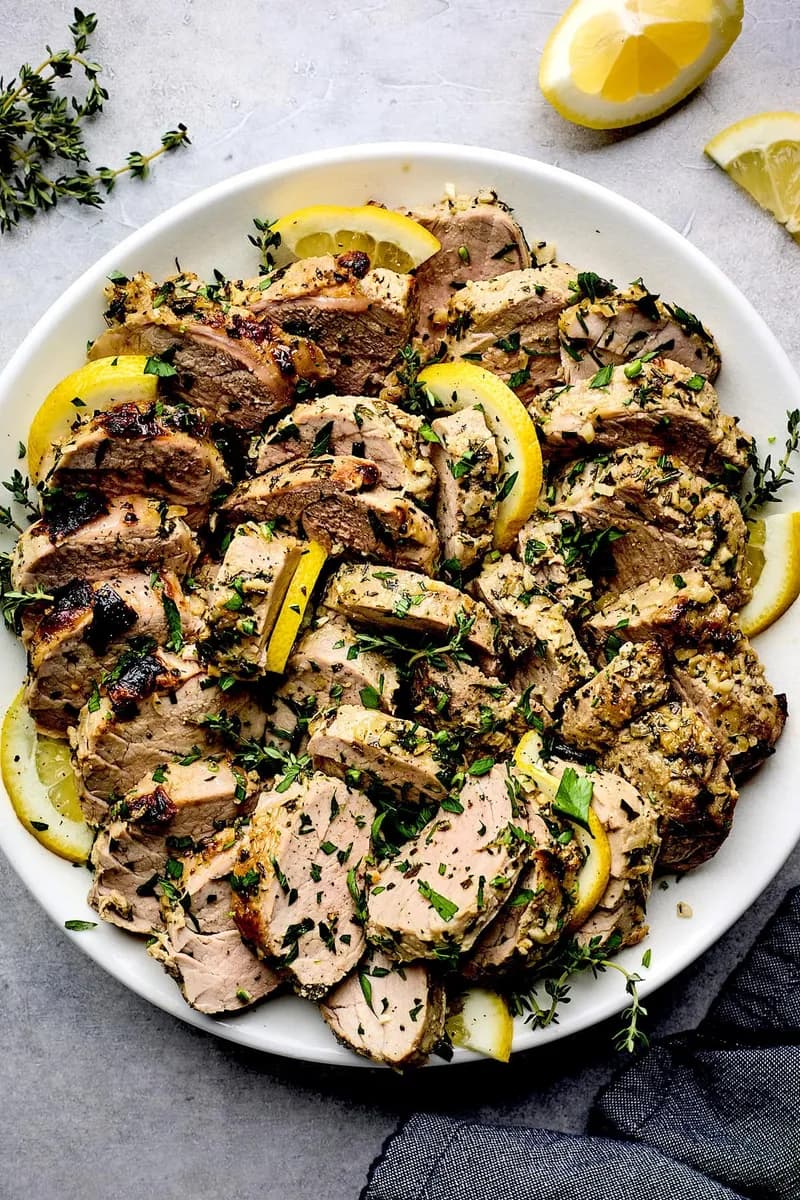
This lemon herb pork tenderloin recipe delivers juicy, flavorful roasted pork with a quick marinade. Perfect for weeknight dinners or special occasions. Try it tonight!
A natural next stop: Pork Tenderloin with Potatoes and Grilled Honey Mustard Pork Tenderloin.
Why This Lemon Herb Pork Tenderloin Works So Well
This pork tenderloin with lemon and herbs uses a quick marinade to infuse the meat with bright, savory flavor. After an hour in the fridge, the pork is ready to roast, coming out tender and juicy. It’s a weeknight-friendly meal that feels special enough for company.
Why You’ll Love This Easy Pork Tenderloin Recipe
- The marinade tenderizes the pork while adding layers of lemon, garlic, and herb flavor.
- The short ingredient list means you can pull this together quickly.
- Roasting the pork with lemon and onion wedges creates a built-in side.
Key Ingredients for Lemon Herb Pork Tenderloin
- Pork tenderloin: Two tenderloins around 1 lb each are ideal. Look for even thickness so they cook evenly. The marinade works best with lean tenderloin, not pork loin.
- Fresh herbs: Parsley, rosemary, and thyme create the aromatic base. Fresh is crucial here; dried herbs won’t provide the same bright flavor. If you only have dried, use 1 teaspoon total in place of the fresh amounts.
- Dijon mustard: Its tangy heat cuts through the richness of the pork and helps the marinade stick. Smooth or whole grain both work, but avoid bright yellow mustard.
Kitchen Tools for This Roasted Pork Tenderloin
- Rimmed baking sheet
- Parchment paper or aluminum foil for easy cleanup
- Instant-read thermometer (the only reliable way to hit 145°F)
- Ziploc bag or glass bowl for marinating
- Sharp knife for slicing
Tips for the Best Lemon Herb Pork Tenderloin
Let the pork marinate for at least an hour so the lemon and herbs really sink in. You can leave it up to 12 hours if your schedule calls for it. Use fresh thyme, rosemary, and parsley here; dried herbs won’t give the same punch. When roasting, rely on an instant-read thermometer to pull the pork at 145°F. Overcooking is the fastest way to dry out tenderloin. After it comes out of the oven, let it rest for 10 minutes under foil so the juices can redistribute.
Expert Tips for Perfectly Roasted Pork Tenderloin
Pick tenderloins that are similar in size so they cook evenly. If they have a silvery membrane on the outside, trim it off; it won’t soften during roasting. The marinade’s Dijon and honey do more than add flavor: the mustard helps the herbs cling to the meat, and the honey encourages browning. Always discard leftover marinade that touched raw pork. Slice the rested tenderloin against the grain for the most tender pieces.
Lemon Herb Pork Tenderloin Variations
To grill this pork tenderloin, heat your grill to 500°F. Place the marinated tenderloins directly on the grates, close the lid, and cook for 10 to 12 minutes, rotating every 3 to 4 minutes, until an instant-read thermometer registers 145°F. The high heat gives you a nice char. You can also swap the fresh herb combo to suit your garden: try basil instead of rosemary or add a little tarragon. Just keep the total herb amount the same.
What to Serve with Lemon Herb Pork Tenderloin
The roasted lemon and onion wedges that cook alongside the pork are a natural side, so you’ve already got a head start. Add a simple green salad with vinaigrette to balance the richness. For a heartier meal, serve the sliced pork over mashed potatoes or alongside a grain like farro or rice pilaf. Steamed or roasted green beans or asparagus also complement the lemon herb flavors nicely.
How to Store Leftover Pork Tenderloin
Refrigerate leftover sliced pork in an airtight container for up to 4 days. Keep the slices whole or in large pieces to prevent drying out. The roasted onions and lemon wedges can be stored separately and added back when serving.
Can You Freeze Lemon Herb Pork Tenderloin?
Yes, you can freeze cooked pork tenderloin for up to 3 months. Let the meat cool completely, then wrap each tenderloin tightly in plastic wrap followed by a layer of foil. Place in a freezer-safe bag, pressing out excess air. Thaw overnight in the refrigerator before reheating.
Best Ways to Reheat Pork Tenderloin
To reheat without drying out the pork, warm it in a 300°F oven for about 10 minutes, loosely covered with foil. You can also use the microwave on 50% power in 30-second bursts, but the oven better preserves the tender texture. For slices, a quick sear in a hot skillet with a splash of broth works well too.
Frequently Asked Questions About This Pork Tenderloin Recipe
How long should I marinate the pork?
At least 1 hour to allow the flavors to penetrate, but you can go up to 12 hours. Marinating longer than 12 hours may start to break down the meat texture due to the acid in the lemon juice.
What internal temperature should pork tenderloin reach?
145°F is the target. Use an instant-read thermometer inserted into the thickest part. After removing from the oven, let it rest for 10 minutes; the temperature will rise a few more degrees during that time.
Can I use pork loin instead of pork tenderloin?
Not recommended. Pork loin is a larger, leaner cut that cooks differently and will likely dry out. Stick with pork tenderloin for the best results.
Do I have to use fresh herbs?
Fresh herbs give the best flavor, but you can substitute dried. Use about 1 teaspoon total of dried herbs (like a blend of thyme, rosemary, and parsley) in place of the fresh amounts. The flavor won’t be as bright, but it will still work.
Can I grill this instead of roasting?
Yes. Grill over high heat (500°F) for 10 to 12 minutes, rotating every 3 to 4 minutes, until it reaches 145°F. The grill adds a nice char and smoky flavor.
Recipe
Lemon Herb Pork Tenderloin
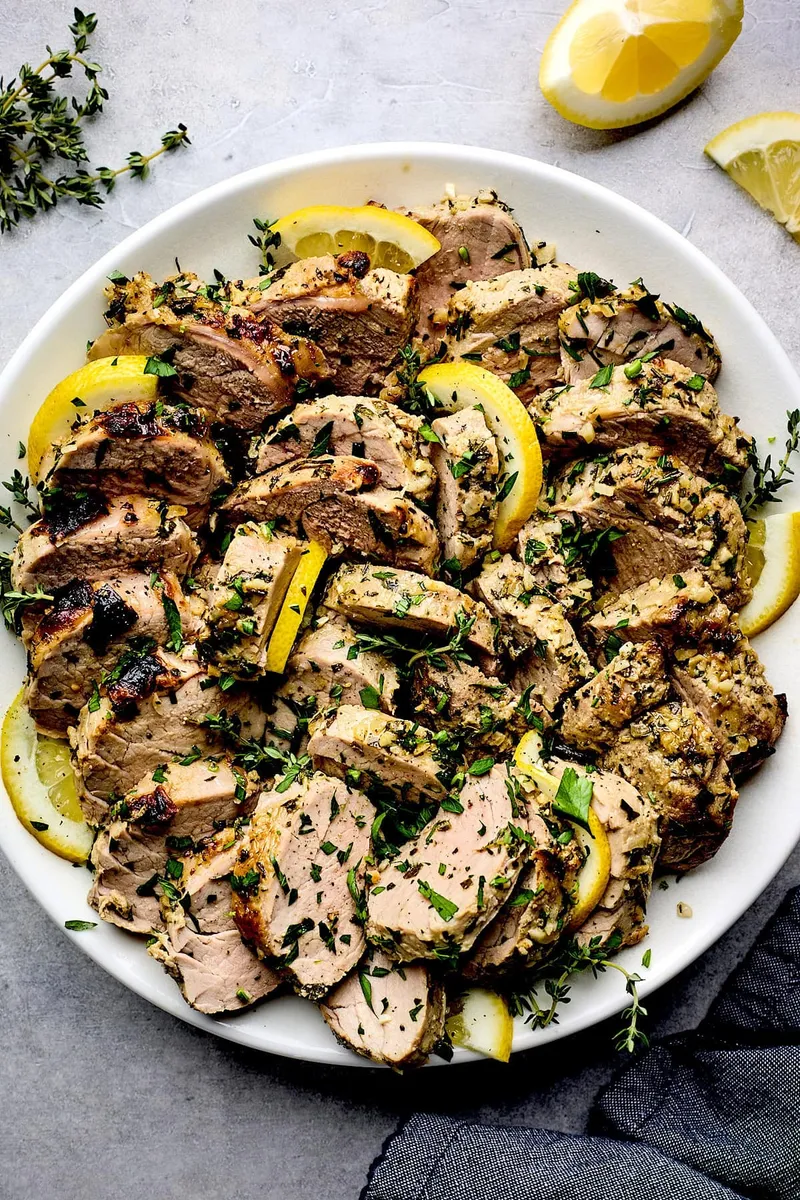
A tender and flavorful roasted pork tenderloin, marinated with zesty lemon and fragrant herbs—perfect for any occasion!
Ingredients
- 2 lbs boneless pork tenderloins, 2 tenderloins
- 3 tbsp olive oil
- 6 cloves garlic, minced
- 3 tbsp shallot, finely chopped
- 2 tbsp lemon juice
- 2 tbsp Dijon mustard
- 2 tbsp honey
- 1 tbsp fresh parsley, finely chopped
- 1 tsp fresh rosemary, finely chopped
- 1 tsp fresh thyme
- 1 tsp kosher salt
- 0.5 tsp black pepper
for roasting
- 1 small red onion
- 1 lemon
garnish
- fresh parsley, chopped
Instructions
- 1
Place the pork tenderloins in a Ziploc bag (or a large bowl). Set aside.
- 2
In a small bowl, whisk together the olive oil, garlic, shallot, lemon juice, Dijon, honey, parsley, rosemary, thyme, salt, and pepper.
- 3
Pour the marinade over the pork. Seal the bag and make sure the pork is well coated. If you are using a bowl, cover with plastic wrap or lid. Place in the refrigerator and let the pork marinate for at least 1 hour or up to 12 hours.
- 4
When ready to cook, preheat the oven to 425 degrees F. Line a large rimmed baking sheet with parchment paper or aluminum foil. Set aside.
- 5
Remove the tenderloins from the bag and place in the center of the sheet pan, not touching. Discard the remaining marinade.
- 6
Cut the red onion a lemon into thick slices or wedges. Place them around the pork tenderloins on the baking sheet.
- 7
Place the pan in the oven and roast for 20 to 25 minutes, or until the pork is cooked through and reaches an internal temperature of 145 degrees F.
- 8
Remove the pan from the oven and transfer the tenderloins to a cutting board. Tent with aluminum foil and let rest for 10 minutes.
- 9
Use a sharp knife to cut the pork into 1/2-inch-thick slices. Garnish with parsley and serve warm.
Nutrition (per serving)
Calorie breakdown
How this was calculated — 15 of 15 ingredients matched
Nutrition information is automatically calculated from USDA FoodData Central, so should only be used as an approximation. Actual values may vary depending on the ingredients, brands, and preparation methods used.
Open in analyzerKeyword: dairy-free, gluten-free, herb, lemon, Roasted
This post may contain affiliate links. Read our disclosure policy.
Share this recipe
You Might Also Like
View All →

About the Author
NutriforksNutriForks is a home-cooking site built around two simple ideas: recipes should actually work, and you should know what’s in them. Every recipe pairs clear, tested instructions with a full nutrition breakdown, so healthy, everyday cooking is genuinely easy.