Whole Wheat Noodles with Peanut Sauce and Vegetables

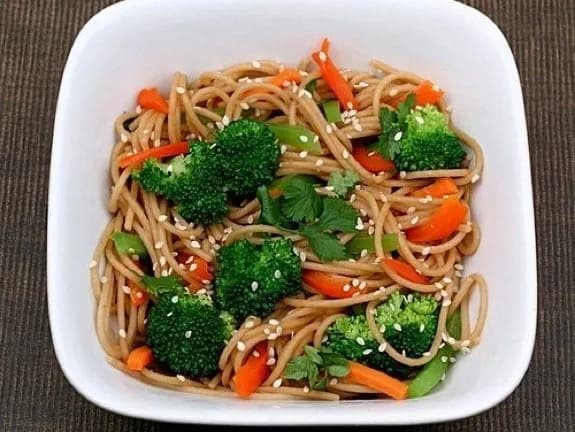
Make whole wheat noodles with peanut sauce and vegetables for a quick, healthy weeknight dinner. This easy recipe features a homemade peanut sauce and fresh veggies. Read
If Noodles is the assignment, Sesame Noodles, Creamy Chicken Noodle Soup, 5-Ingredient Spinach Parmesan Zucchini Noodles, and Chickpea Noodle Soup deliver too.
How This Peanut Sauce Noodle Dish Became a Weeknight Favorite
I first made these whole wheat noodles with peanut sauce and vegetables on a lazy Valentine’s weekend. My husband had made breakfast, so I took over dinner. I was craving the peanut dipping sauce from my vegetable spring rolls, but I didn’t have all the ingredients for rolls. So I tried the sauce on noodles and veggies instead. I used whole wheat spaghetti (soba would work too), broccoli, red and green bell peppers, carrots, and cilantro. The whole thing came together in minutes and was outstanding. It’s a perfect example of how eating healthy doesn’t have to be complicated or expensive.
Why This Whole Wheat Pasta Recipe Works for Busy Nights
- The homemade peanut sauce is rich and savory, made with hoisin and peanut butter, and it takes just 10 minutes on the stove.
- You can use whatever vegetables you have on hand, making it a great clean-out-the-fridge meal.
- The whole wheat noodles add a nutty flavor that pairs perfectly with the sauce, and the dish is ready in under 20 minutes.
Key Ingredients for This Peanut Sauce Recipe
- Lemongrass: It adds a subtle citrusy aroma to the sauce. Use fresh lemongrass if possible; you can substitute with a strip of lemon zest in a pinch.
- Hoisin sauce: This gives the sauce depth and a touch of sweetness. Look for it in the Asian section of your grocery store.
- Peanut butter: Smooth peanut butter works best for a creamy sauce. Natural peanut butter is fine, but stir it well before measuring.
Kitchen Tools for This Quick Pasta Dinner
- Small saucepan for simmering the sauce
- Large pot for boiling pasta
- Steamer basket or colander for blanching vegetables
- Large bowl for tossing everything together
Tips for Making the Best Whole Wheat Noodles with Peanut Sauce
Simmer the lemongrass in water for exactly 5 minutes, then strain it out before adding the other sauce ingredients. If the sauce doesn’t thicken after simmering, whisk it over medium heat for one minute. When tossing the noodles and vegetables, add the sauce gradually and taste as you go. You probably won’t need all of it. I only used about 2 to 3 tablespoons for a single serving. The dish is good hot or cold, so you can serve it right away or pack it for lunch the next day.
Make the Peanut Sauce in Advance for Faster Weeknight Dinners
The peanut sauce can be made up to a week ahead and stored in the refrigerator. Simply simmer the lemongrass in water, strain, then whisk in the remaining ingredients and simmer for 5 minutes. Let it cool, then transfer to a jar. When you’re ready to eat, just cook the noodles and vegetables, reheat the sauce gently, and toss. This makes the whole process even quicker on busy nights.
Variations for This Vegetable Noodles Recipe
Add protein by tossing in grilled chicken, shrimp, or cubed tofu. For extra heat, stir in a teaspoon of sriracha or a pinch of red pepper flakes when you make the sauce. Swap the vegetables for snow peas, bok choy, or shredded cabbage. You can also use rice noodles or regular spaghetti instead of whole wheat. The sauce is flexible enough to work with whatever you have.
What to Serve with Whole Wheat Noodles with Peanut Sauce
Top the noodles with a sprinkle of sesame seeds and fresh cilantro for a pop of color and flavor. If you want a side, try a simple Asian slaw with rice vinegar and sesame oil, or a bowl of edamame sprinkled with sea salt. The dish also works well as a cold noodle salad for picnics or packed lunches.
How to Store Leftover Whole Wheat Noodles with Peanut Sauce
Store leftover noodles and sauce separately in airtight containers in the refrigerator. The noodles will keep for up to 3 days, and the sauce will stay good for about a week. Keep the sauce in a separate container so the noodles don’t get soggy.
Can You Freeze This Peanut Sauce Recipe?
The peanut sauce freezes well for up to 3 months. Let it cool completely, then transfer to a freezer-safe container. Thaw in the refrigerator overnight before using. The noodles themselves don’t freeze well because they become mushy, so I recommend freezing only the sauce and making fresh noodles when you’re ready to serve.
Best Ways to Reheat Whole Wheat Noodles with Peanut Sauce
To reheat the noodles, place them in a microwave-safe bowl with a splash of water and microwave in 30-second bursts until warm. You can also reheat them in a skillet over medium heat, stirring occasionally. Reheat the sauce separately on the stovetop or in the microwave, then toss everything together just before serving.
Whole Wheat Noodles with Peanut Sauce FAQs
Can I use regular pasta instead of whole wheat?
Yes, regular spaghetti or any long pasta works fine. The sauce will taste just as good, though you’ll miss the nutty flavor of whole wheat.
Can I make this gluten-free?
Absolutely. Use gluten-free spaghetti or soba noodles made from 100% buckwheat. Check that your hoisin sauce is also gluten-free, as some brands contain wheat.
Can I use a different nut butter?
Yes, almond butter or cashew butter work well. The flavor will be slightly different but still delicious. Avoid chunky nut butters for a smoother sauce.
How do I make the sauce thicker?
If the sauce is too thin after simmering, whisk it over medium heat for one minute. You can also let it cool, as it will thicken slightly as it sits.
Can I add protein to this dish?
Definitely. Grilled chicken, shrimp, or cubed tofu are all great additions. Cook the protein separately and toss it in with the noodles and vegetables.
How long does the sauce keep in the fridge?
The sauce will keep in an airtight container in the refrigerator for about a week. You can also freeze it for up to 3 months.
Recipe
Whole Wheat Noodles with Peanut Sauce and Vegetables
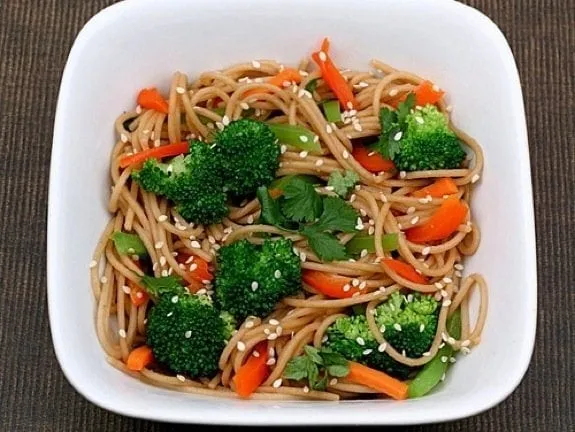
Whole wheat noodles tossed with a homemade peanut sauce and fresh vegetables. A quick, healthy, and flavorful weeknight meal.
Ingredients
sauce
- 1 small piece lemongrass, chopped
- ginger, freshly grated
- 1 cup water
- 0.5 cup hoisin sauce
- 3 tbsp smooth peanut butter
- 1.5 tbsp sugar
- whole wheat spaghetti or soba noodles
- broccoli
- red bell pepper, cut into strips
- green bell pepper, cut into strips
- carrot, cut into strips
- cilantro
- sesame seeds
Instructions
- 1
To make the peanut sauce: In a small sauce pan, simmer lemon grass in the water for 5 minutes, strain out the lemongrass and add the remaining ingredients to the water. Whisk well and simmer an additional 5 minutes. If the sauce doesn’t thicken, whisk for one minute over medium heat.
- 2
Boil a pot of water and add a little bit of salt. Add the pasta and cook until done. Drain and set aside.
- 3
Steam or blanch the vegetables. I steamed mine.
- 4
In a large bowl, add the pasta and vegetables. Toss. Stir in some peanut sauce. I didn't measure anything because I was making the dish for one. If you are making it for several people, make a box of pasta and lots of veggies. Slowly stir in the sauce and taste. You probably won't need all of it. When I made it for myself, I probably only used 2-3 Tablespoons of the sauce. It is pretty flavorful. Just add a little as you go and save the leftover sauce in the refrigerator.
- 5
I sprinkled the pasta and veggies with sesame seeds before serving. This dish is good hot or cold. You can use whatever veggies you like too. Enjoy!
Nutrition (per serving)
Calorie breakdown
How this was calculated — 12 of 13 ingredients matched
Nutrition information is automatically calculated from USDA FoodData Central, so should only be used as an approximation. Actual values may vary depending on the ingredients, brands, and preparation methods used.
Open in analyzerKeyword: dairy-free, dairyFree, vegetarian
This post may contain affiliate links. Read our disclosure policy.
Share this recipe
You Might Also Like
View All →

About the Author
NutriforksNutriForks is a home-cooking site built around two simple ideas: recipes should actually work, and you should know what’s in them. Every recipe pairs clear, tested instructions with a full nutrition breakdown, so healthy, everyday cooking is genuinely easy.