Sufganiyot Recipe: Fresh Jelly Doughnuts for Hanukkah
Make yeast-raised sufganiyot with strawberry jam, clear proofing cues, oil-temperature guidance, and a backward schedule for serving fresh.
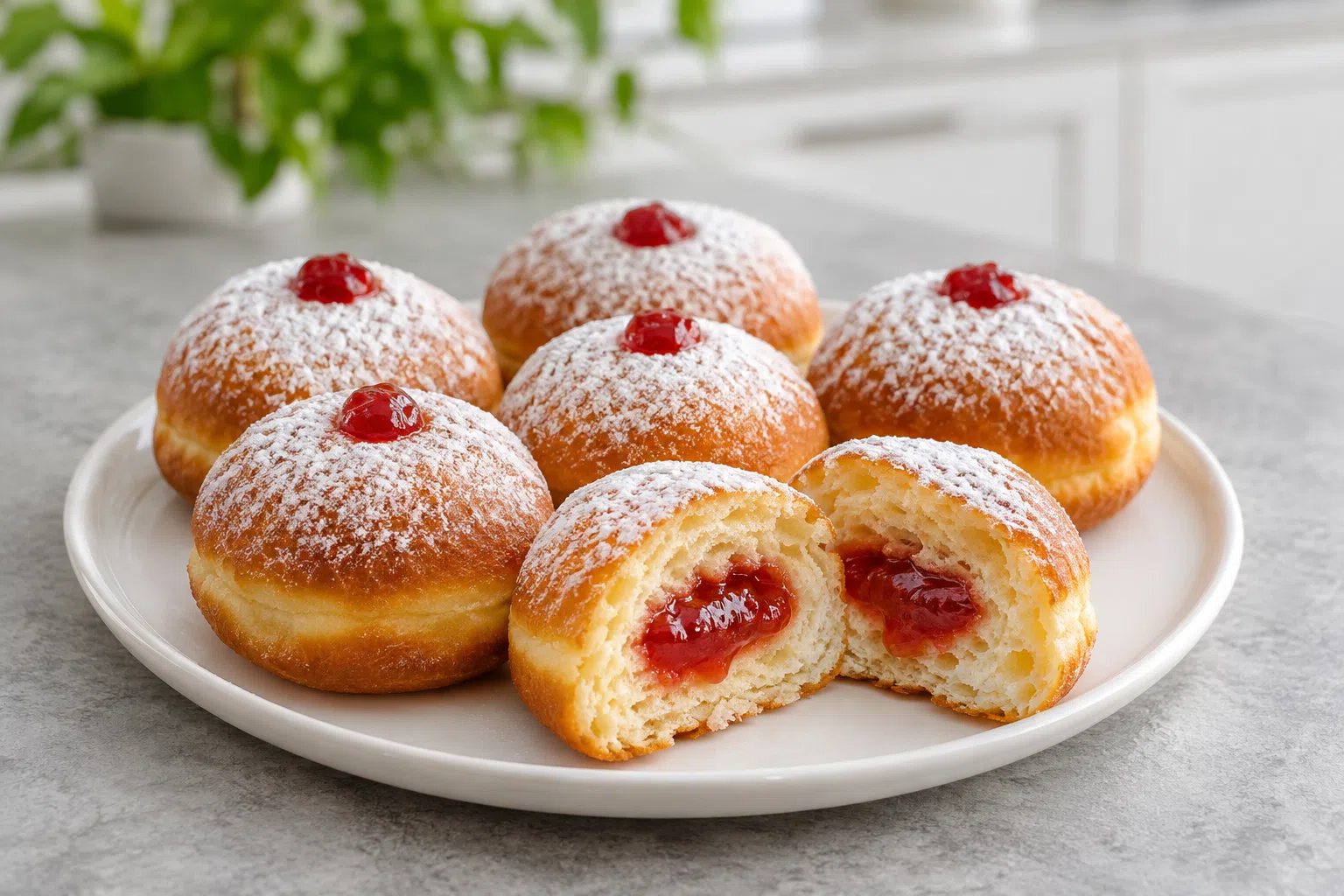
Table of contents
This sufganiyot recipe makes 12 yeast-raised, jelly-filled doughnuts: knead a soft enriched dough, let it rise twice, fry small batches at 350°F, then cool before adding seedless strawberry jam. Allow about four hours, including a buffer. The backward schedule below helps bring fresh Hanukkah doughnuts to the table without rushing the final batches. These are a sweet, carbohydrate-rich dessert; the filling and powdered sugar provide sweetness without an additional glaze.
What are sufganiyot?
Sufganiyot are round doughnuts commonly filled with jelly and eaten during Hanukkah. Frying connects them with the holiday’s tradition of foods cooked in oil.
This is one yeast-raised, fried recipe with strawberry filling. Its focus is coordinating proofing, frying, and cooling so the last doughnuts receive the same attention as the first.
Sufganiyot recipe ingredients and equipment
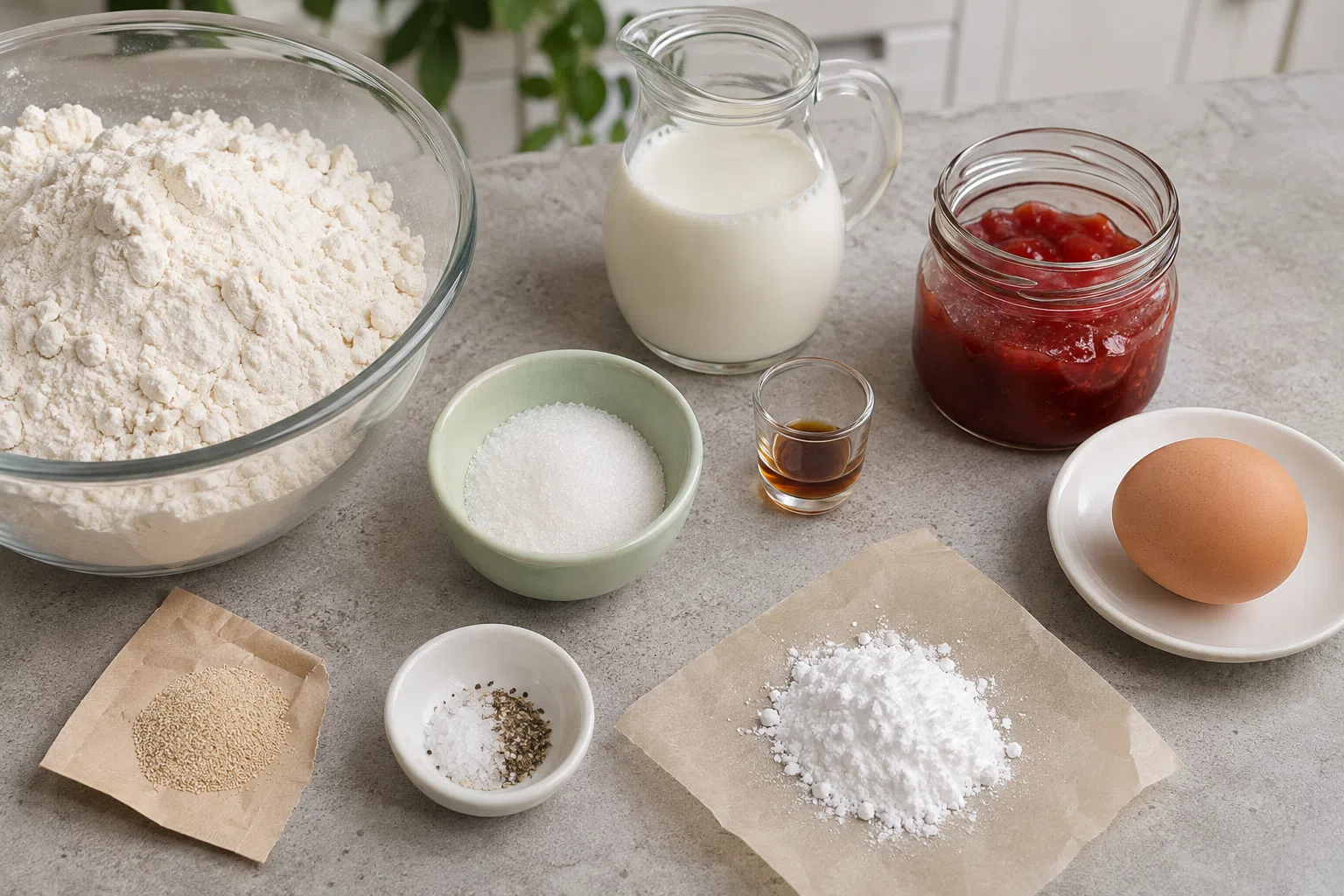
The formula uses 360 g all-purpose flour, 180 ml milk, one egg, 40 g sugar, 42 g butter, 7 g instant yeast, 6 g fine salt, and vanilla. It yields 12 portions of approximately 58 g raw dough. The complete measurements appear in the printable card.
Use a heavy 6-quart Dutch oven, a deep-fry thermometer, digital scale, mixing bowl, dough hook or sturdy spoon, two baking sheets, parchment squares, wire rack, slotted spoon, and piping bag with a narrow filling tip.
Choose a smooth, pipeable jelly or jam
Seedless strawberry jam should fall from a spoon in a thick ribbon. Stir it thoroughly before filling. Fruit chunks block narrow tips, while watery jam escapes easily.
Powdered sugar finishes the doughnuts. Neutral frying oil, such as canola or sunflower oil, keeps the strawberry flavor clear.
Measure flour and use the specified yeast
Weigh flour when possible; scooping firmly packs extra flour into the cup. Use instant yeast mixed directly with the dry ingredients. Check its expiration date: Illinois Extension explains that yeast weakens over time.
For a dairy-free adaptation, replace milk with unsweetened soy milk and butter with the same weight of plant-based baking butter. Flavor will change. Gluten-free flour needs a separately formulated dough because this shaping method depends on gluten.
Work backward from serving time
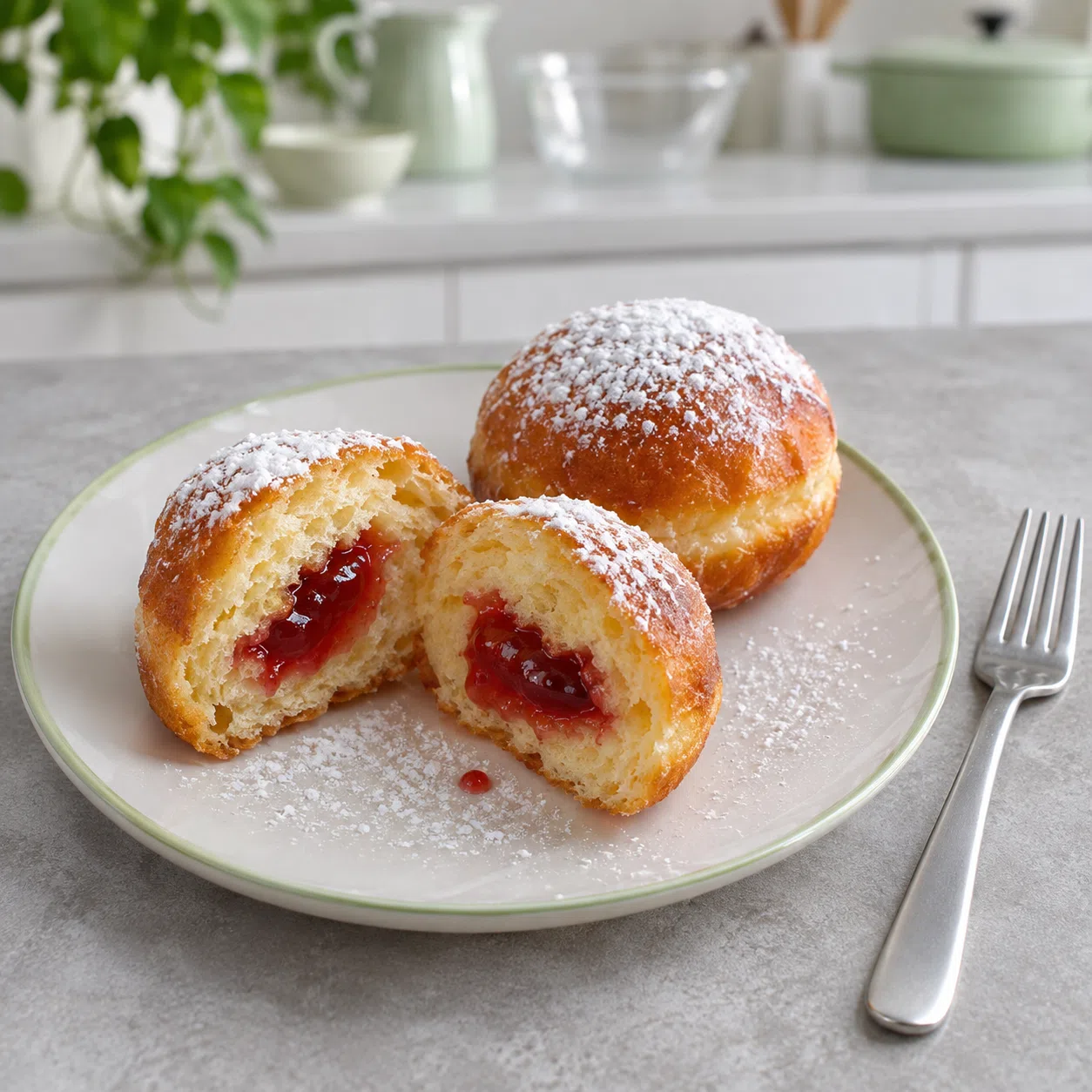
Budget about 40 minutes for preparation and finishing, 35 minutes for frying and recovery, and the remaining time for rising, cooling, and flexibility. Oil heating overlaps the second rise.
Same-day preparation schedule
For example, for a 7 p.m. serving, begin at 3 p.m.:
| Time | Task | Readiness checkpoint |
|---|---|---|
| 3:00–3:25 | Measure, mix, and knead | Soft, elastic dough |
| 3:25–4:40 | First rise | Roughly doubled; allow until 4:55 if needed |
| 4:40–4:55 | Divide and shape | Even, gently flattened rounds |
| 4:55–5:35 | Second rise; heat oil near the end | Puffy dough, slow spring-back |
| 5:35–6:10 | Test doughnut and remaining batches | Include recovery between rounds |
| 6:10–6:30 | Finish cooling the last batch | Barely warm |
| 6:30–6:40 | Fill and arrange | Jam stays inside |
| 6:40–7:00 | Buffer; dust at serving | Adjust for slower proofing |
These are planning windows. If dough needs longer, move the later tasks accordingly.
What can be prepared the night before
Measure dry ingredients, cut parchment, and arrange the cooling and filling equipment. Refrigerated dough is another option, but its warming time changes the next day’s schedule; see the make-ahead section.
Mix and knead the dough
Warm milk to 90–100°F (32–38°C). Butter should yield easily to pressure without looking oily.
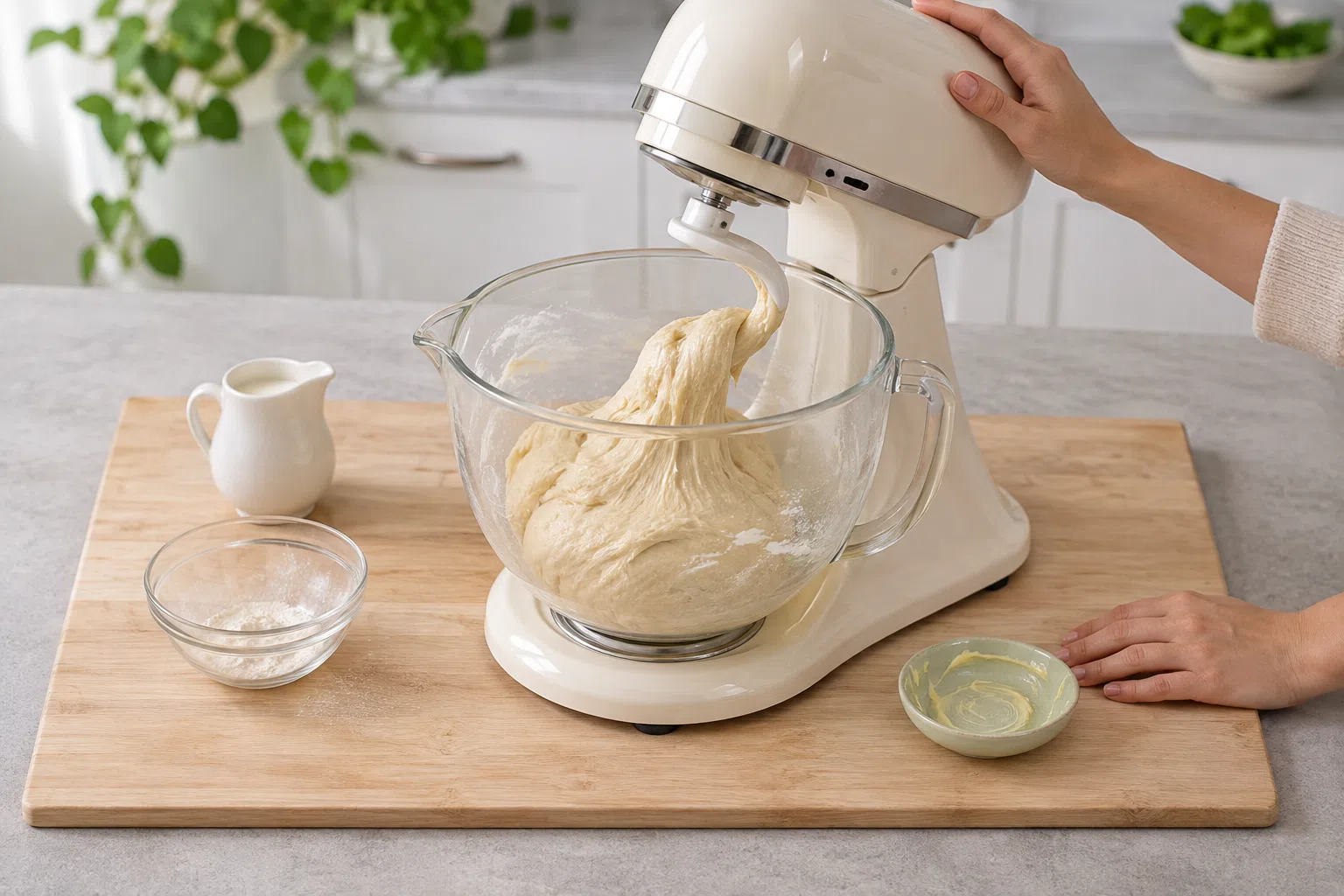
Mix flour, sugar, yeast, and salt. Add milk, egg, and vanilla, then combine until no loose flour remains. Knead with a dough hook on low speed for four minutes. Add butter in small pieces and continue for 6–9 minutes.
By hand, squeeze in the butter, then knead for approximately 12–15 minutes overall. Use a scraper when the dough sticks.
The endpoint is soft, tacky, elastic dough that stretches into a thin membrane before tearing. It should hold together while clinging lightly to a fingertip. Adding flour until the dough feels completely dry produces a firmer dough and denser crumb.
Do not taste the raw mixture. The FDA identifies flour as a raw food and advises against eating uncooked dough.
Proof and shape with visible readiness cues
First rise: judge volume rather than the clock
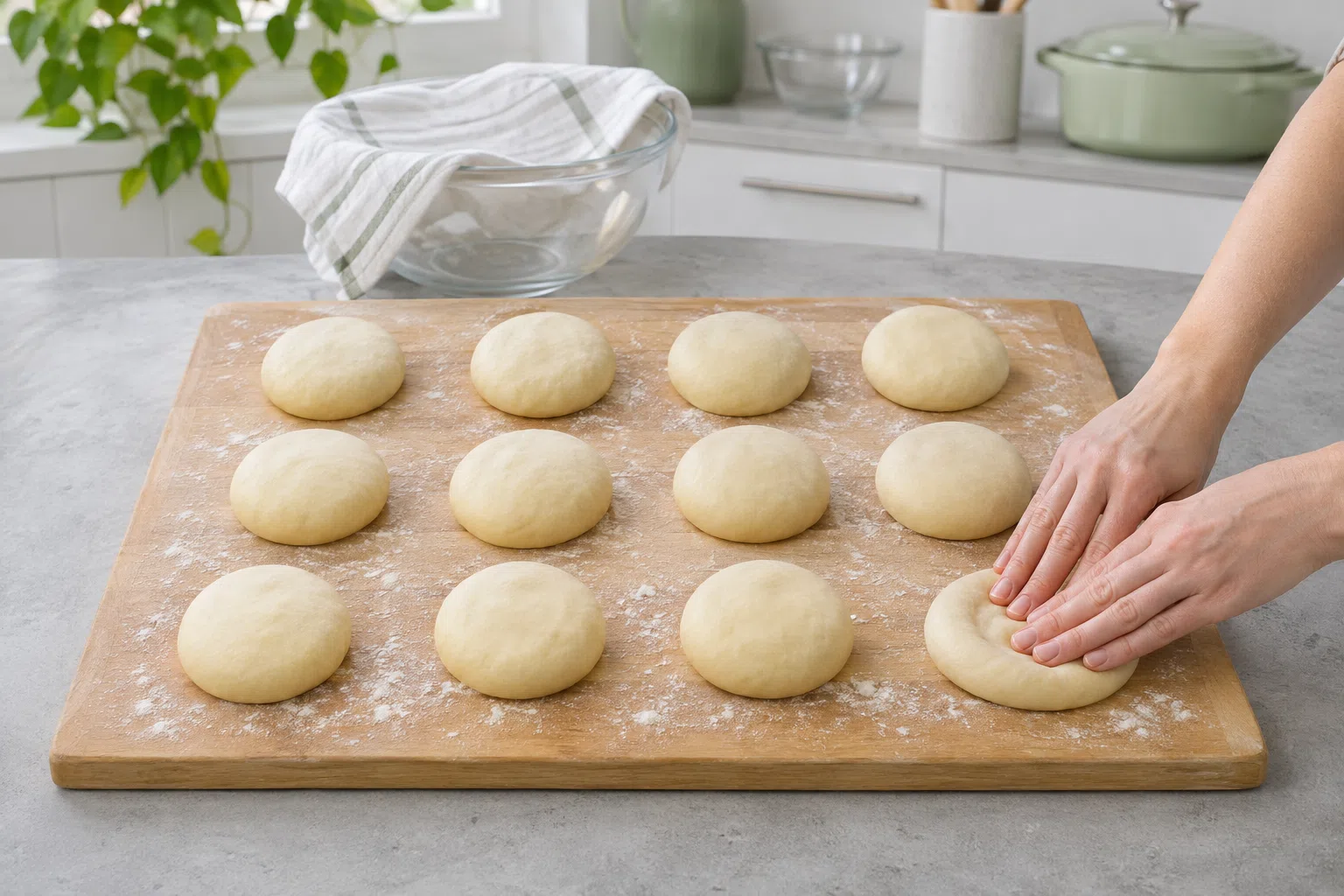
Cover the bowl and leave it somewhere comfortably warm, away from direct heat. Start checking after 60 minutes; allow approximately 60–90 minutes.
Look for roughly double the original volume and a rounded, airy surface. A straight-sided container makes the change easier to judge.
Shape evenly and check the second rise
Divide into 12 equal portions, approximately 58 g each. Gather each piece’s edges underneath, pinch closed, and roll gently against the counter. Flatten to about 2½ inches across and ½ inch thick.
Place on individual parchment squares and cover loosely so the surfaces stay supple.
After approximately 30–50 minutes, the rounds should look fuller and feel light. Press gently near an edge:
- Immediate spring-back: allow more time.
- Slow return with a shallow mark: ready to fry.
- Wrinkling or collapse: overproofed; handle carefully and fry promptly.
Fry small batches and let the oil recover
Add oil to a depth of two inches, leaving at least three inches of headroom. Keep the pot no more than half full. Clip the thermometer securely with its sensing area submerged according to its instructions, clear of the pot bottom.
The sufganiyot frying temperature target is 350°F (177°C). Aim for 340–355°F (171–179°C) while doughnuts cook.
Fry one test doughnut before the first batch
Lower one round into the oil. Fry for approximately 90–120 seconds per side, turning when the underside is evenly golden.
Rest it briefly, then cut through the center. The crumb should be fluffy and set, with no wet, gummy strip. Adjust heat or cooking time before committing the remaining dough.
Respond to falling or overshooting oil temperature
After removing a batch, wait until the thermometer returns to 350°F. Allow roughly 1–3 minutes, but use the reading.
If temperature remains below 340°F, reduce the next batch from three doughnuts to two. Avoid sharply increasing the burner: oil can overshoot after the food leaves the pot. Above 355°F, lower the heat and wait before adding more dough.
Transfer gently and drain without trapping steam
Lower each round close to the surface without dropping it. If using parchment to support the dough, remove the paper with tongs once it releases.
Drain on a rack over a baking sheet. Leave space between doughnuts so steam escapes. Keep utensils dry, supervise the pot continuously, and never pour water onto burning oil.
Fill the doughnuts without leaking
Cool each batch for approximately 20–30 minutes, until barely warm. A hot, fragile doughnut can split under filling pressure.
Match jam consistency to the filling tip
Stir room-temperature jam until smooth. Test the piping bag over a bowl: jam should emerge with gentle pressure. If it will not pass, use a wider tip or strain out fruit pieces rather than forcing the bag.
A clean food-safe squeeze bottle with a narrow nozzle also works.
Avoid split doughnuts and overfilling
Insert a clean skewer through the side, stopping short of the opposite crust. Sweep gently to open a small central cavity.
Insert the filling tip deeply. Pipe approximately two teaspoons while slowly withdrawing it. Stop when the doughnut feels slightly heavier or jam approaches the opening. Set it down with that opening angled upward.
Coordinate batches for fresh Hanukkah serving
Shape the first six rounds, then the remaining six about ten minutes later, keeping unshaped dough covered. Leave the second tray in a cooler spot so later rounds develop more slowly. Check each tray independently.
Arrange stations in order: proofed dough, frying pot, draining rack, then filling area. Finish filling an earlier batch only when the oil is safely supervised; a solo cook should complete frying first.
Doubling the recipe means more rounds through the pot. It also requires staggered proofing and extra serving time, so keep the same batch size.
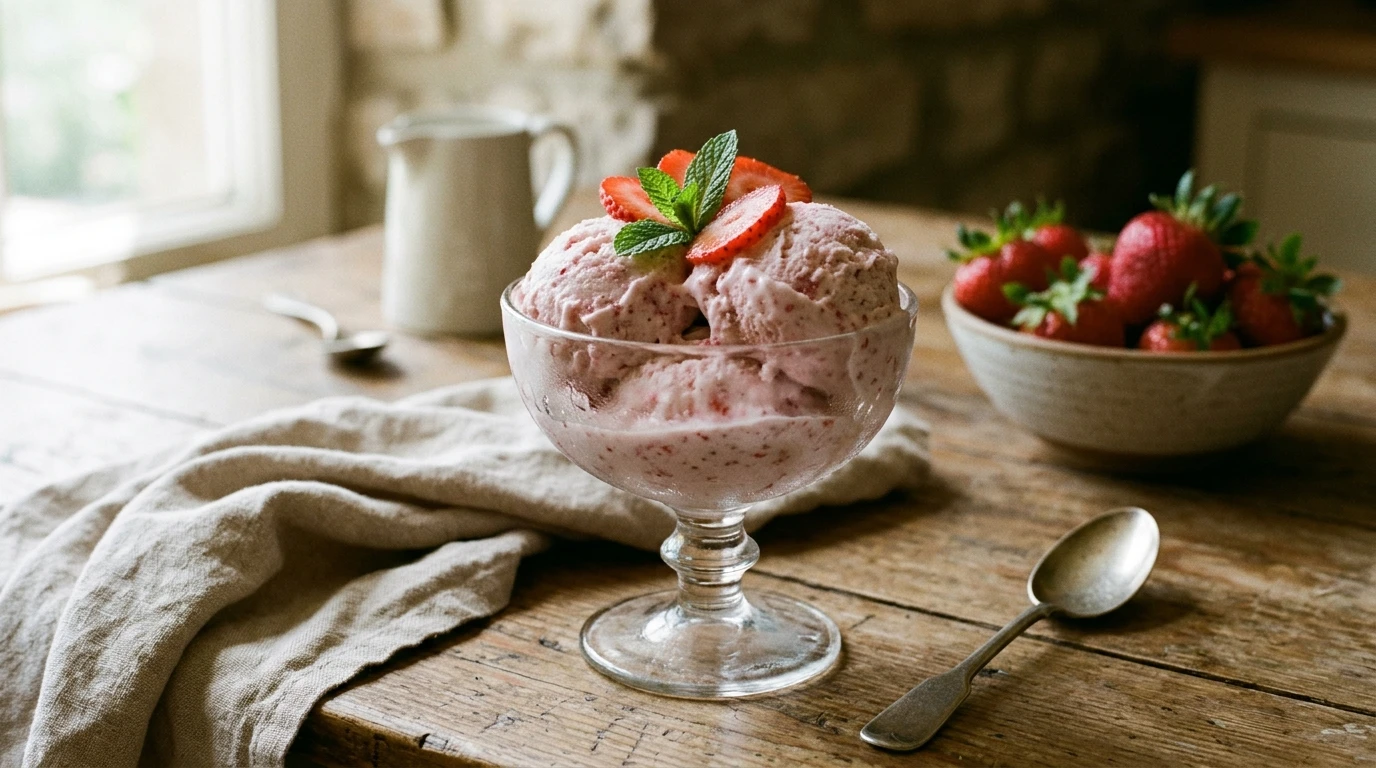
Dust immediately before serving on a wide white platter, with fresh strawberries and coffee or unsweetened tea. For a mixed dessert tray, jam thumbprint cookies carry the fruit theme. Baked pumpkin donut holes offer a separate oven-baked option.
Troubleshooting dense, greasy, or leaking sufganiyot
| Symptom | Likely cause | Next-batch correction |
|---|---|---|
| Dense centers | Underproofing or excess flour | Wait for slow spring-back; weigh flour |
| Dark crust, raw middle | Oil too hot or oversized portions | Check temperature and portion weight |
| Excess oil absorption | Oil too cool or crowded pot | Recover temperature; fry fewer |
| Collapsed doughnuts | Overproofing or rough transfer | Shorten final rise; support gently |
| Blocked filling tip | Fruit pieces or stiff jam | Strain jam or widen the tip |
| Leaking jam | Overfilling or a through-hole | Make a shallower cavity; stop sooner |
The most useful habits are weighing portions, testing one doughnut, and checking oil between every round.
Make-ahead options and leftover storage
For make ahead sufganiyot, refrigerate the covered dough immediately after kneading for 8–12 hours. Use a roomy container. Next day, let it become pliable and finish expanding to roughly double before shaping; allow approximately 60–120 minutes, then judge the dough itself.
Keep refrigeration at 40°F (4°C) or below, following FDA storage guidance. Avoid leaving the milk-and-egg dough unattended at room temperature overnight.
Freeze fully cooled, unfilled doughnuts individually wrapped inside a freezer bag for up to one month for quality. This is a conservative planning limit; Illinois Extension distinguishes freezer quality limits from safety. Freezing preserves existing quality rather than restoring freshness.
Thaw wrapped doughnuts at room temperature until soft. Unwrap and heat on a baking sheet at 300°F (150°C) for 5–8 minutes, until warmed through. Cool to barely warm before filling.
Refrigerate leftover jam-filled doughnuts in an airtight container and use within two days. Expect a firmer crumb and dampened sugar coating. Follow the jam jar’s refrigeration instructions for unused filling. Freshness declines before doughnuts necessarily become unsafe; discard moldy doughnuts entirely.
For another enriched-dough project with an oven finish, try orange rolls.
Printable sufganiyot recipe card
Yield: 12 doughnuts, approximately 58 g dough each
Preparation and finishing: about 40 minutes
Frying and recovery: about 35 minutes
First rise: 60–90 minutes
Second rise: 30–50 minutes
Cooling: 20–30 minutes, partly overlapping frying
Total: approximately four hours, including a modest buffer
Ingredients
- 360 g all-purpose flour, 3 cups spooned and leveled
- 40 g granulated sugar, 3 tablespoons plus 1 teaspoon
- 7 g instant yeast, 2¼ teaspoons
- 6 g fine salt, 1 teaspoon
- 180 ml whole milk, ¾ cup, at 90–100°F
- 1 large egg, about 50 g without shell
- 42 g softened unsalted butter, 3 tablespoons
- 5 ml vanilla extract, 1 teaspoon
- 160 g seedless strawberry jam, about ½ cup
- 15 g powdered sugar, 2 tablespoons
- Approximately 1.5–2 liters neutral frying oil, sufficient for a two-inch depth
- Up to 1 tablespoon extra flour for shaping
Method
- Mix: Combine flour, sugar, yeast, and salt. Add milk, egg, and vanilla. Mix until shaggy.
- Knead: Knead four minutes on low, incorporate butter gradually, then knead another 6–9 minutes until tacky and elastic.
- First rise: Cover and leave 60–90 minutes, until roughly doubled.
- Shape: Divide into 12 equal pieces. Roll smooth, flatten gently, and place on parchment squares.
- Second rise: Cover loosely for 30–50 minutes, until puffy and a gentle indentation returns slowly.
- Heat: Bring two inches of oil to 350°F in a heavy 6-quart Dutch oven, with at least three inches of headroom.
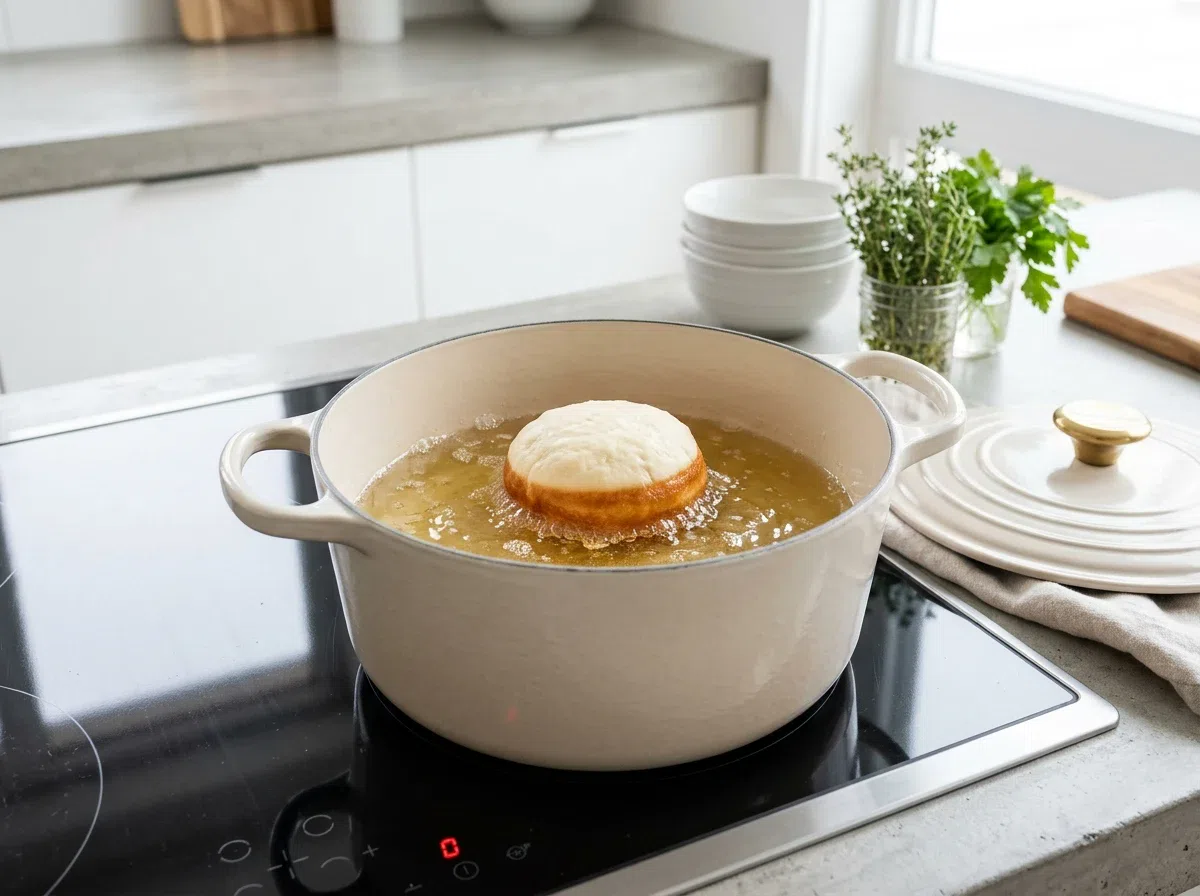
- Test and fry: Fry one doughnut for 90–120 seconds per side. Cut open after a brief rest to check for set crumb. Continue in batches of 2–3, keeping oil at 340–355°F and recovering to 350°F between rounds.
- Cool: Drain on a rack for 20–30 minutes per batch, until barely warm.
- Fill: Open a side cavity without piercing through. Pipe about two teaspoons of jam into each, withdrawing gently.
- Finish: Dust with powdered sugar and serve. Keep water away from the frying station and allow oil to cool completely before moving the pot.
Food photos in this article are digital illustrations, designed and styled by our studio for this recipe.
Estimated calories per serving
Approximately 250 kcal per doughnut, calculated for 12 doughnuts using the listed ingredient amounts and USDA FoodData Central ingredient values. This estimate assumes 5 g of frying oil absorbed per doughnut, an unmeasured calculation allowance. It includes all the jam and powdered sugar; actual calories depend on oil absorption and filling used.
Sufganiyot Recipe: Fresh Jelly Doughnuts for Hanukkah
Make yeast-raised sufganiyot with strawberry jam, clear proofing cues, oil-temperature guidance, and a backward schedule for serving fresh.
Ingredients
Step-by-Step Instructions
Tap any step number to check it off as you cook-
Combine flour, sugar, instant yeast, and salt. Add lukewarm milk, egg, and vanilla; mix into a shaggy dough. Knead with a dough hook on low speed for 4 minutes, then add softened butter gradually and knead for another 6–9 minutes, until soft, elastic, and tacky.
-
Cover and let rise in a comfortably warm place for 60–90 minutes, until roughly doubled. Divide into 12 equal pieces, approximately 58 g each. Shape into smooth balls and flatten gently to about 2 1/2 inches wide and 1/2 inch thick.
-
Place on individual parchment squares, cover loosely, and proof for 30–50 minutes, until noticeably puffy and a light indentation returns slowly. Keep later portions cooler if frying will take several rounds.
-
Heat 2 inches of oil in a heavy 6-quart Dutch oven to 350°F (177°C), leaving at least 3 inches of headroom and keeping the pot no more than half full. Fry one test doughnut for about 90–120 seconds per side, until golden. Rest briefly and cut it open; the center should be fluffy without wet dough.
-
Fry the remaining doughnuts in batches of 2–3, maintaining 340–355°F (171–179°C). Let the oil return to 350°F between batches. Transfer to a rack over a baking sheet.
-
Cool each batch for 20–30 minutes, until barely warm. Make a side cavity with a clean skewer without piercing through. Pipe about 2 teaspoons of jam into each doughnut, withdrawing the tip gently and stopping before jam backs out.
-
Dust with powdered sugar immediately before serving. Keep water away from hot oil, never leave the pot unattended, and let the oil cool completely before moving it.
Estimated Nutrition Facts
Values calculated per serving based on verified USDA nutrition data
*Percent Daily Values are based on a 2,000 calorie diet. Your daily values may be higher or lower depending on your personal calorie needs.
complete the meal
Pairs Well With
Frequently asked questions
Can I make sufganiyot dough the night before?
Refrigerate the covered dough immediately after kneading for 8–12 hours at 40°F (4°C) or below. The next day, let it become pliable and finish rising until roughly doubled before shaping. Allow extra time for cold dough rather than following the same-day schedule.
How do I know the doughnuts have proofed enough?
The shaped dough should look noticeably fuller and feel light. A gentle fingertip indentation should return slowly while leaving a shallow mark. Immediate spring-back means more rising time is needed; collapse suggests overproofing.
What temperature should the oil be for sufganiyot?
Start at 350°F (177°C) and aim to keep the oil between 340°F and 355°F (171–179°C) while frying. Let it return to 350°F before adding another batch.
Why are my sufganiyot dark outside but raw inside?
The oil may be too hot, or the dough pieces may be too large or underproofed. Check the thermometer, keep portions near 58 grams, and cut open the first fried doughnut to check its center before continuing.
How do I fill sufganiyot without the jelly leaking?
Cool the doughnuts until barely warm, make a side cavity without piercing through, and pipe in about 2 teaspoons of smooth jam. Withdraw the tip slowly and stop when the doughnut feels slightly heavier or jam starts returning toward the opening.
Can I fill sufganiyot without a piping bag?
Use a clean food-safe squeeze bottle with a narrow nozzle. Make the cavity first, insert the nozzle, and squeeze gently. Use smooth seedless jam that flows through the nozzle without force.
Sources
- FDA: Flour Is a Raw Food and Other Safety Facts— fda.gov
- FDA: Are You Storing Food Safely?— fda.gov
- Illinois Extension: No ‘knead’ to stress when making yeast bread— extension.illinois.edu
- Illinois Extension: Freezer Storage— extension.illinois.edu