Pasta Primavera

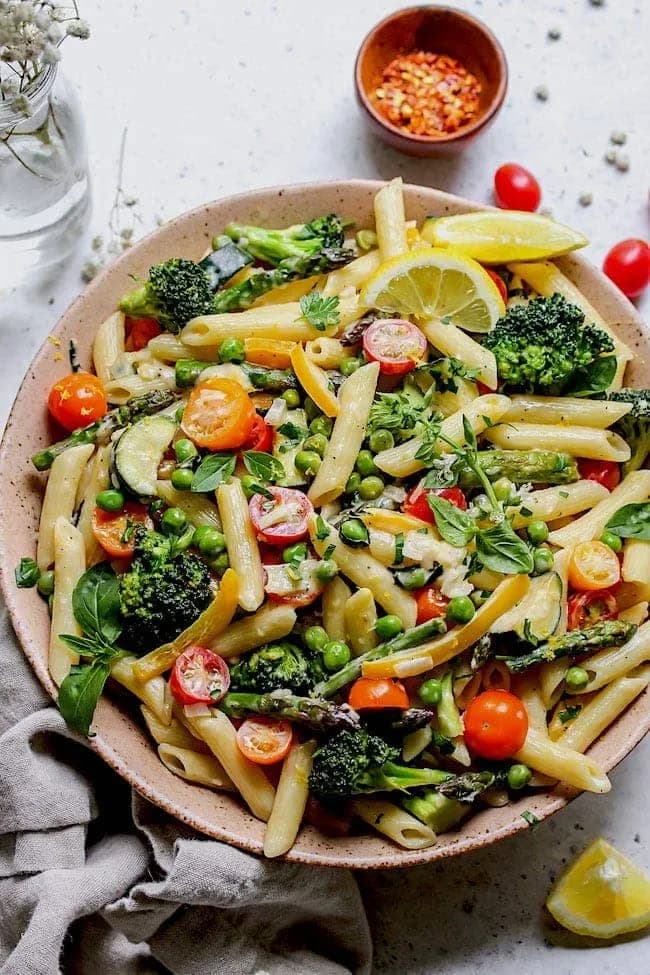
Enjoy vibrant spring vegetables in this easy Pasta Primavera recipe with a light lemon cream sauce. Ready in 30 minutes, it’s the perfect fresh pasta dinner.
Worth adding to the list: Burst Cherry Tomato Sauce, Skillet Creamy Sweet Potatoes & Lentils, and Brown Butter Brussels Sprouts Pasta with Hazelnuts.
Why This Pasta Primavera Works So Well
This pasta primavera gets its soul from a simple but clever lemon cream sauce. It’s light enough for spring but satisfying enough to stand alone as dinner. The vegetables stay crisp, the sauce clings to every piece of pasta, and the whole thing comes together in about 35 minutes. I love that you can swap in whatever’s in your fridge, it’s a recipe that works with you, not against you.
3 Reasons You’ll Love This Pasta Primavera
- The lemon cream sauce is the real star. It uses just half a cup of cream, so it’s rich but not heavy, with enough lemon to brighten every bite.
- It’s endlessly adaptable. You can add chicken, shrimp, or white beans for protein, swap in whatever vegetables you have, or use gluten-free pasta without changing anything else.
- It’s ready in 35 minutes. While the pasta boils, you cook the veggies and make the sauce. Everything comes together fast, perfect for a weeknight.
Key Ingredients for the Best Pasta Primavera
- Lemons: You need both zest and juice. Zest the lemon before juicing, the oils in the zest add a bright, floral note that bottled juice can’t match. Use a microplane for the zest so it’s fine and distributes evenly.
- Heavy cream: Half a cup gives the sauce a silky texture without making it too heavy. Don’t substitute milk or half-and-half; they’ll curdle if you simmer them. If you want a lighter sauce, use full-fat coconut milk instead.
- Parmesan cheese: Buy a block of Parmigiano-Reggiano and shred it yourself. Pre-shredded cheese has anti-caking agents that keep it from melting smoothly into the sauce. A microplane or box grater works great.
Kitchen Tools for This Pasta Primavera Recipe
- Large pot (like a Dutch oven) for boiling pasta
- Large skillet (cast iron or nonstick) for sautéing veggies and making the sauce
- Microplane or zester for the lemon zest
Tips for Making the Best Pasta Primavera
Don’t skip salting the pasta water, it’s the only chance to season the noodles from the inside. For the vegetables, cook them just until tender but still bright; you want a little crunch. When you reduce the vegetable broth, let it simmer until it’s half the volume; that concentrates the flavor before you add the cream. If the sauce seems too thick after adding the cheese, stir in a splash of the pasta cooking water to loosen it.
Pasta Primavera Variations to Try
This recipe is a great base for mixing things up. If you want more protein, grill some chicken breasts or shrimp and toss them in at the end. For a vegetarian protein, add a can of drained white beans or cubed tofu with the sauce. To make it vegan, use full-fat coconut milk instead of cream, skip the Parmesan, and add a spoonful of nutritional yeast. You can also swap the penne for farfalle, rigatoni, or even spaghetti, just adjust the cooking time to what the package says.
What to Serve with Pasta Primavera
Serve it with a side of garlic bread or dinner rolls to soak up the extra sauce. A simple green salad with lemon vinaigrette keeps things light. If you want a heartier meal, pair it with lemon butter chicken thighs or grilled shrimp, the citrus flavors match beautifully. Garnish individual bowls with extra Parmesan, fresh basil or parsley, and a pinch of red pepper flakes.
How to Store Leftover Pasta Primavera
Let the pasta cool completely, then transfer it to an airtight container. It will keep in the fridge for 3 to 4 days. The sauce thickens as it sits, so when you reheat, add a splash of vegetable broth or water to bring it back to the right consistency.
Can You Freeze Pasta Primavera?
Freezing a cream-based sauce can cause it to separate and turn grainy when thawed. If you must freeze it, do so before adding the cream, freeze the cooked pasta and vegetables, then make the sauce fresh when you reheat. Even so, I recommend eating it fresh or within a few days from the fridge for the best texture.
Best Ways to Reheat Pasta Primavera
The best method is on the stovetop. Put the leftovers in a skillet with a splash of broth or water, cover, and warm over medium-low heat, stirring occasionally. This takes about 5 minutes and helps the pasta stay tender. You can also microwave it in a covered dish for 1-2 minutes, stirring halfway, but the vegetables may soften more.
Pasta Primavera FAQs
Can I use a different type of pasta?
Absolutely. Farfalle, rigatoni, orecchiette, fusilli, or any short pasta works well. If you prefer long noodles like spaghetti or fettuccine, go ahead, just watch the cook time. Gluten-free pasta is fine too; use your favorite brand and cook it al dente.
How do I make this pasta primavera dairy-free?
Swap the heavy cream for full-fat canned coconut milk (the kind in a can, not the carton). Use a good-quality dairy-free butter or olive oil instead of butter, and omit the Parmesan or use a vegan parmesan alternative. The sauce will still be creamy and delicious.
How can I keep the vegetables from getting mushy?
Sauté them in batches if your skillet is crowded, and cook them just until tender-crisp. They will continue to soften slightly when you combine them with the hot sauce and pasta. Also, add the frozen peas at the end, they just need to thaw, not cook.
Can I add chicken or shrimp to make it a main dish?
Yes. For chicken, cook seasoned diced chicken breast in the skillet first, then set it aside and proceed with the vegetables. For shrimp, sauté them quickly in olive oil for 2-3 minutes per side and stir them in at the end. You can also add white beans or chickpeas for a vegetarian protein boost.
Recipe
Pasta Primavera

Enjoy the vibrant flavors of Pasta Primavera! This fresh pasta dish features seasonal spring vegetables and a light and refreshing lemon cream sauce. It's the perfect pasta dish for spring, summer, or anytime!
Ingredients
- 16 oz penne pasta
- 1 tbsp olive oil
- 8 oz asparagus, cut into 1 ½-inch pieces
- 1 yellow bell pepper, cut into 1 ½-inch pieces
- 2 cup small broccoli florets
- 1 small zucchini, chopped
- to taste salt and black pepper, to taste
- 2 tbsp unsalted butter
- 1 shallot, minced
- 4 cloves garlic cloves, minced
- 1 lemon zest
- dash crushed red pepper flakes
- 1 cup vegetable broth
- 0.5 cup heavy cream
- 3 tbsp lemon juice, divided
- 1 cup frozen peas
- 0.5 cup shredded Parmesan cheese
- 1.5 cup halved grape tomatoes
- 0.25 cup chopped basil
- 2 tbsp Italian parsley, for garnish
- extra Parmesan cheese, for garnish
- crushed red pepper flakes, for garnish
Instructions
- 1
Bring a large pot of water to a boil. Add salt and pasta to boiling water. Cook for 11 minutes, stirring occasionally. Drain well. Pour the pasta back into the pot.
- 2
Meanwhile, in a large skillet, heat the olive oil over medium high heat. Add the asparagus, peppers, and broccoli. Sauté for 2 to 3 minutes, stirring occasionally. Add in the zucchini and cook for 1 to 2 minutes or until vegetables are tender, but still crisp. Season vegetables with salt and pepper, to taste. Transfer the vegetables to a large plate or bowl.
- 3
Place the skillet back on the stove. Melt the butter over medium heat. Add the shallot and garlic and cook for 2 minutes. Stir in the lemon zest and vegetable broth. Simmer until the broth reduces by half, about 4 to 5 minutes. Stir in the heavy cream and 2 tablespoons of lemon juice.
- 4
Stir the peas into the pot with the pasta. Stir in the cooked vegetables. Pour the lemon cream sauce over the pasta and vegetables and stir until well combined. Stir in the Parmesan cheese and remaining tablespoon of fresh lemon juice. Gently stir in the tomatoes and basil. Season with salt and black pepper, to taste.
- 5
Pour the pasta primavera into a large serving bowl or dish. Garn
Nutrition (per serving)
Calorie breakdown
How this was calculated — 22 of 22 ingredients matched
Nutrition information is automatically calculated from USDA FoodData Central, so should only be used as an approximation. Actual values may vary depending on the ingredients, brands, and preparation methods used.
Open in analyzerKeyword: Skillet, vegetarian
This post may contain affiliate links. Read our disclosure policy.
Share this recipe
You Might Also Like
View All →




About the Author
NutriforksNutriForks is a home-cooking site built around two simple ideas: recipes should actually work, and you should know what’s in them. Every recipe pairs clear, tested instructions with a full nutrition breakdown, so healthy, everyday cooking is genuinely easy.