Cacio e Pepe

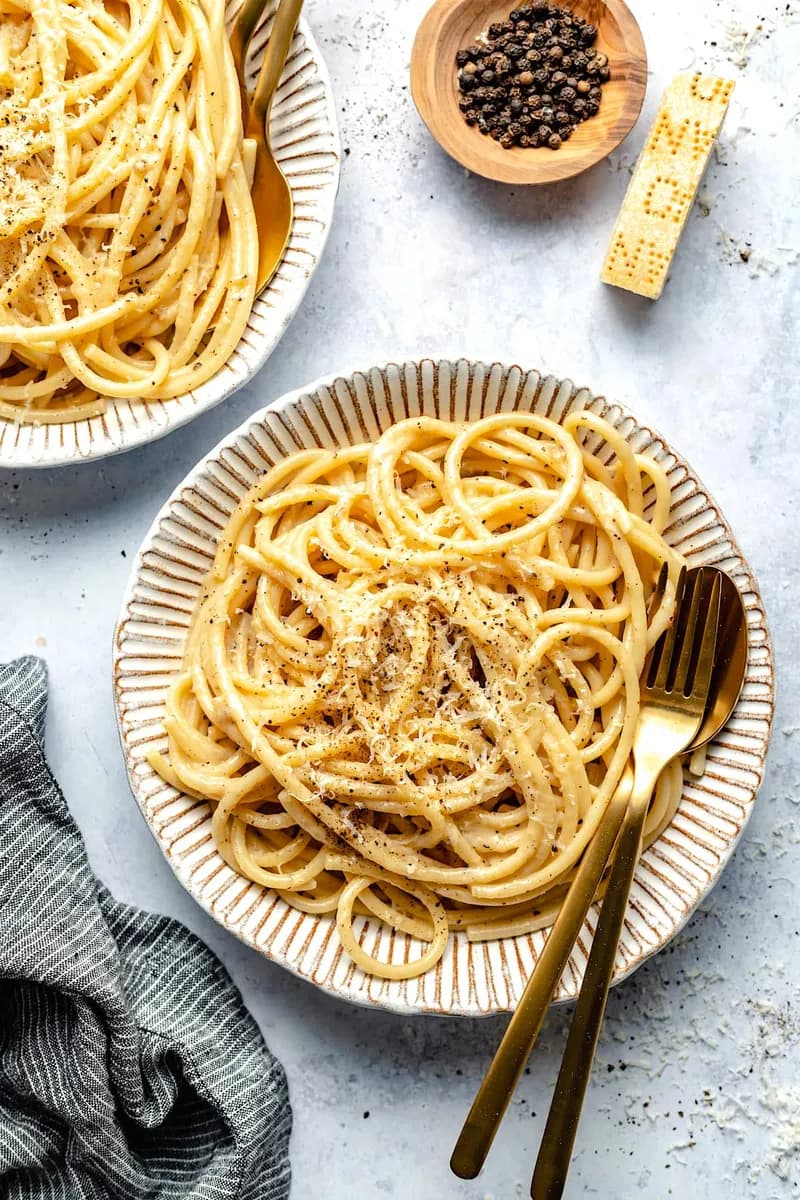
Learn how to make authentic Cacio e Pepe with just 5 ingredients in 20 minutes. This cheesy, peppery pasta is the perfect quick weeknight dinner!
Also worth a look: Slow Roasted Tomato and Roasted Red Pepper Soup, Fall Vegetable Quinoa Soup, Southwest Quinoa Salad, or Asian Quinoa Salad.
What Makes This 5-Ingredient Cacio e Pepe So Good
Cacio e Pepe is a Roman classic that proves you don’t need a long ingredient list for incredible flavor. With just pasta, butter, cheese, pepper, and salt, you get a creamy, peppery sauce that clings to every strand. It’s the kind of pasta I turn to after a busy day when I want something comforting but fast. The bonus? It comes together in about 20 minutes, start to finish.
3 Reasons You’ll Love This Easy Cacio e Pepe Recipe
- Only 5 main ingredients and 20 minutes start to finish, perfect for a quick weeknight dinner.
- The sauce comes together in the same skillet you use for the pasta, so cleanup is minimal.
- The mix of pecorino romano and parmesan gives you a rich, tangy, and salty flavor that beats any takeout.
Key Ingredients for Authentic Cacio e Pepe
- Pecorino Romano, This sheep’s milk cheese gives the dish its signature tangy, salty kick. It’s non-negotiable for authentic flavor. Buy a wedge from the cheese counter and grate it yourself; pre-grated versions won’t melt properly.
- Bucatini, A thick spaghetti-like pasta with a hollow center that catches the sauce. If you can’t find it, spaghetti or fettuccine work fine. The key is using a long, sturdy noodle that can hold up to the heavy sauce.
- Freshly ground black pepper, The star of the show. Grind it fresh from whole peppercorns for the best aroma. The recipe calls for toasted pepper in butter, which mellows its heat while keeping it bold.
Kitchen Tools You’ll Need for Cacio e Pepe
- Large pot, for boiling pasta with plenty of room.
- Large skillet, wide enough to toss the pasta with the sauce.
- Colander, to drain the pasta, but don’t forget to reserve pasta water first.
- Tongs, for tossing the pasta with the cheese and sauce.
- Microplane or fine grater, for grating the cheese into fine, melt-friendly shreds.
Tips for Making the Best Cacio e Pepe at Home
Don’t skip salting the pasta water, it’s your only chance to season the pasta itself. Aim for water that tastes like the sea. And cook the pasta just to al dente; overcooked noodles turn mushy and won’t hold the sauce as well.
When you grate the cheese, use a microplane or the fine side of a box grater. Pre-shredded cheese has anti-caking agents that cause clumping. Grate it fresh from a block, and you’ll get a silky sauce every time.
After you add the cheese to the skillet, keep the heat off to avoid scrambling it. The residual heat from the pasta and the pasta water is enough to melt it. If you need extra warmth, turn the burner to low just for a minute.
Cacio e Pepe Variations to Try
If you want to switch up the pasta shape, spaghetti or fettuccine are good substitutes for bucatini. You can also adjust the cheese ratio: use all pecorino romano for a sharper flavor, or all parmesan for something milder. For a heartier meal, add crispy pancetta or grilled chicken on top. If you’re sensitive to pepper, reduce the amount to 1 teaspoon, but the pepper is what makes this dish sing, so don’t skip it entirely.
What to Serve with Cacio e Pepe
This pasta pairs beautifully with a bright, acidic side to cut through the richness. A simple arugula salad with lemon vinaigrette works wonders, as does a classic caprese salad with fresh tomatoes and basil. For something heartier, serve it alongside garlic bread or roasted broccoli. And if you’re going all out, finish the meal with flourless chocolate cake.
How to Store Leftover Cacio e Pepe
Store leftovers in an airtight container in the fridge for up to four days. The pasta will absorb some sauce, so when you reheat, add a splash of water or milk to bring back the creamy texture. Reheat in the microwave or on the stovetop over low heat, stirring often.
Can You Freeze Cacio e Pepe?
Freezing is not ideal because the cheese sauce can separate and become grainy. But if you have leftover pasta you don’t want to waste, freeze it in an airtight container for up to one month. Thaw in the refrigerator overnight, then reheat gently with a splash of water and a little extra butter to help the sauce come back together.
Best Ways to Reheat Cacio e Pepe
The easiest method is the microwave: add a tablespoon of water per serving, cover, and heat in 30-second bursts, stirring between each, until hot. For stovetop reheating, place the pasta in a skillet with a splash of water over low heat, tossing frequently until warmed through. Avoid high heat, which can make the sauce separate.
Cacio e Pepe Recipe FAQs
Why does my cacio e pepe sauce clump?
Clumping usually happens when the cheese is added to the skillet while the heat is on, or when using pre-shredded cheese. Make sure to turn off the heat before adding the cheese, and always grate it fresh from a block. Tossing with reserved pasta water helps, too.
Can I use all parmesan instead of pecorino romano?
Yes, but the flavor will be milder and less tangy. Authentic cacio e pepe calls for pecorino romano, but you can substitute all parmesan or use a mix. If you swap, you may need to adjust the salt because parmesan is less salty.
What’s the best pasta shape for cacio e pepe?
Tonnarelli would be traditional, but it’s hard to find. Bucatini is my favorite because its thick, hollow strands catch the sauce. Spaghetti or fettuccine also work well. Just avoid short pasta shapes like penne, which don’t hold the sauce as nicely.
Can I make cacio e pepe dairy-free?
It’s tricky because the cheese is the star. You could try dairy-free versions of pecorino and parmesan, but the texture and flavor won’t be the same. Another option is a cashew-based “cheese” sauce, but that takes the dish in a different direction.
Recipe
Cacio e Pepe
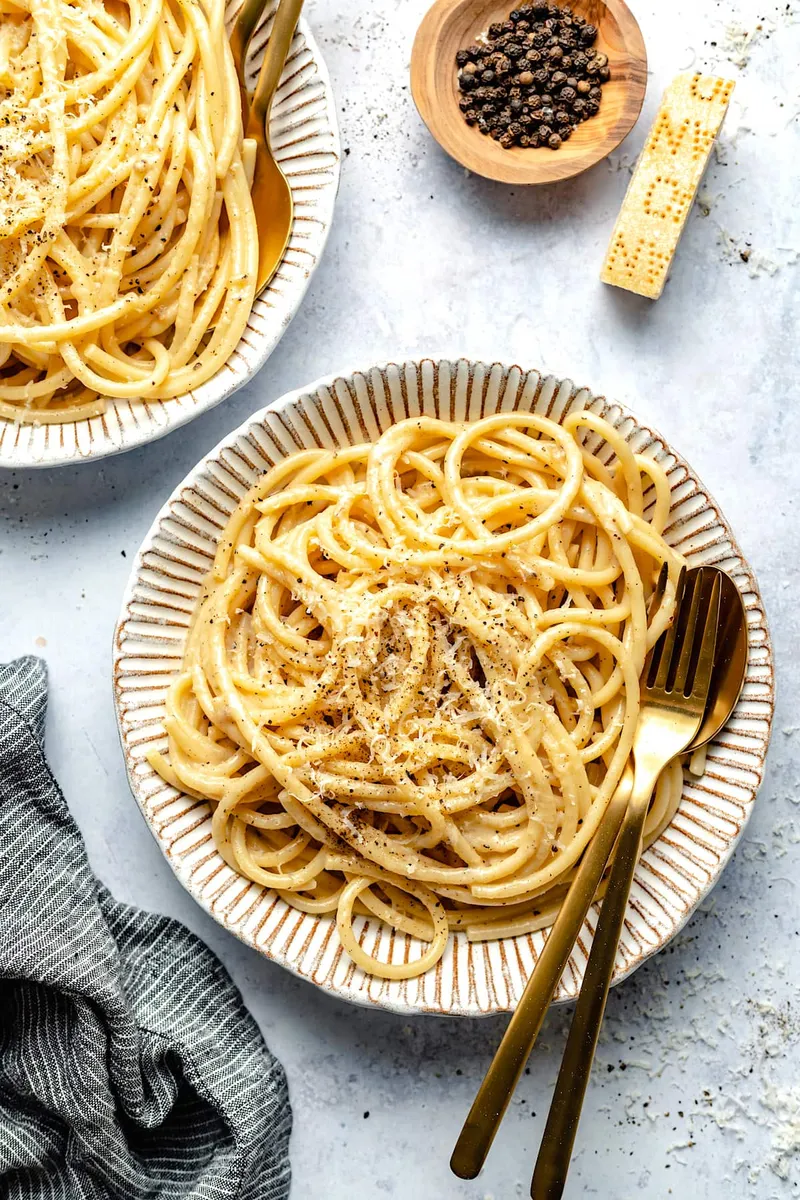
You only need 20 minutes and 5 ingredients to make Cacio e Pepe. This classic pasta dish is simple, but so good! This cheesy, peppery pasta is absolutely delicious and perfect for an easy weeknight meal.
Ingredients
- 2 tbsp kosher salt
- 12 oz bucatini pasta or spaghetti
- 5 tbsp unsalted butter
- 1.5 tsp freshly ground black pepper
- 0.75 cup Parmesan cheese, freshly grated
- 0.75 cup Pecorino Romano cheese, freshly grated
- extra grated cheese, for serving, optional
Instructions
- 1
Bring a large pot of water to a boil. Add the kosher salt and return to a rolling boil. Add the pasta and cook until al dente according to the package directions. Don’t overcook the pasta.
- 2
When the pasta is about halfway done cooking, start making the sauce. In a large skillet, melt the butter over medium-high heat. Add the black pepper and stir, cook for about 2 minutes.
- 3
Add 1/2 cup of the pasta water from the pasta pot and bring to a simmer. Stir and cook for 1 minute.
- 4
Before you drain the pasta, reserve 1/2 cup of the pasta water. Use a colander to drain the pasta. Add the pasta, Parmesan cheese, and Pecorino cheese to the skillet, make sure the heat is off. Using tongs, toss until the all of the cheese is melted and until all of the pasta noodles are well coated. Add the remaining 1/2 cup of pasta water and turn the heat on low. Cook for 1 minute or until the water mixes into the pasta.
- 5
Transfer the pasta to plates or bowls and garnish with additional cheese, if desired. Serve immediately.
Nutrition (per serving)
Calorie breakdown
How this was calculated — 7 of 7 ingredients matched
Nutrition information is automatically calculated from USDA FoodData Central, so should only be used as an approximation. Actual values may vary depending on the ingredients, brands, and preparation methods used.
Open in analyzerKeyword: Boiled, nutFree, quick, vegetarian
This post may contain affiliate links. Read our disclosure policy.
Share this recipe
You Might Also Like
View All →



About the Author
NutriforksNutriForks is a home-cooking site built around two simple ideas: recipes should actually work, and you should know what’s in them. Every recipe pairs clear, tested instructions with a full nutrition breakdown, so healthy, everyday cooking is genuinely easy.